Systems Change
Change moves at the speed of trust.
Today’s systemic challenges—humanitarian crises, climate, inequality, and many business problems—are complex and dynamic. Real progress isn’t about pushing harder on the same levers; it’s about transforming the patterns and relationships that shape outcomes.
That means working across disciplines, sectors, and perspectives to build shared understanding and unlock new possibilities.
This kind of systems change has been a thread running through much of my work. Whether convening diverse actors in humanitarian response, shaping transformation in global organisations, or designing strategy for social enterprise, I’ve often found myself working at the edges—where disciplines meet, where complexity lives, and where new ground can be broken.
What’s Coming Next
Having worked on humanitarian cash systems and developed the Humanitarian Xchange platform, I’m now developing this area with greater focus. With Humanitarian Society ,we are the convening future thinkers, exploring new problem spaces. I am also developing my practice as a systemic coach. This is a journey of learning, experimentation, and co-creation.
Get in touch if you’re:
Working on changing human systems for the better,
Interested in joining the Humanitarian Society,
want to experiment with some free systemic coaching support.
I’m keen to connect with others who are navigating complexity and want to shape meaningful change together.
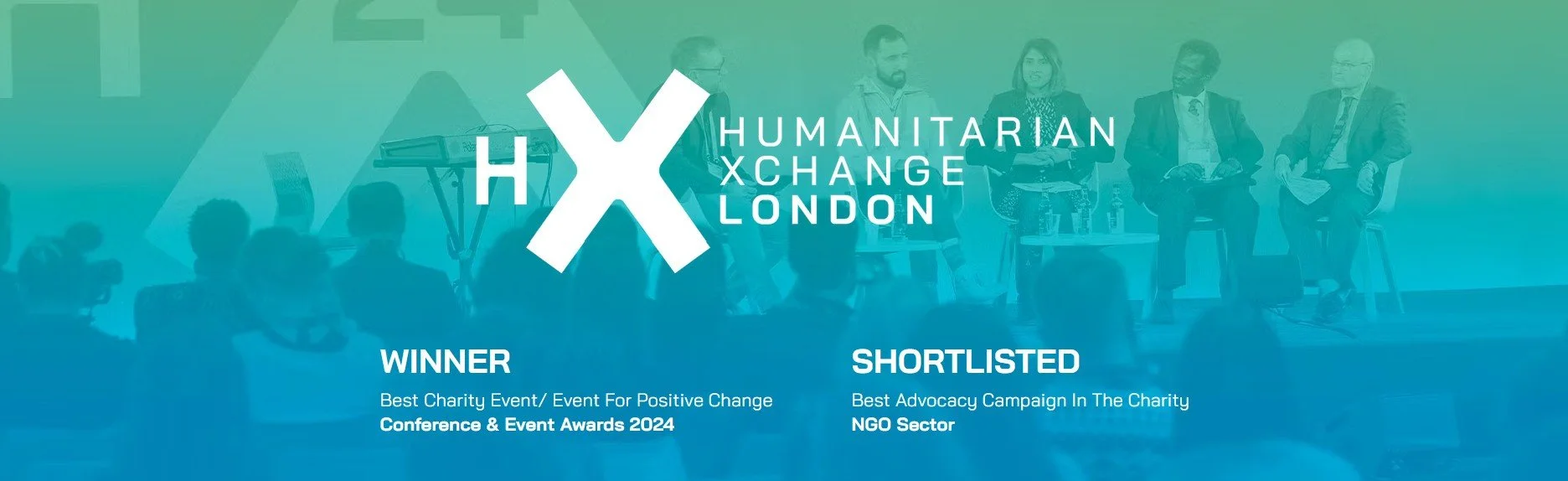
As Deputy Director at the Humanitarian Leadership Academy (HLA), I launched the Humanitarian Xchange (HX)—a bold experiment to reimagine how the sector learns, collaborates, and acts. HX brought together over 4,000 practitioners in the UK’s largest humanitarian gathering in decades, positioning HLA and its 800,000-strong learner community as a catalyst for change.
HX was more than an event—it was a systemic intervention: connecting actors across boundaries, challenging orthodoxies, and creating conditions for new alliances and ideas. It also tested a new business model for convening, supporting HLA’s journey toward financial sustainability. With support secured from Google.org the concept has grown further with follow-on events in Türkiye, South Sudan, Uganda, and Iraq.
How We Did It
Catalytic convening: Partnered with a creative agency to deliver a hybrid experience with 100+ speakers, from frontline responders to global leaders like Baroness Amos.
Mobilised a global network: Thousands joined live and continue to engage through digital content and regional events.
Impact: HX was hailed as “a triumph… we created a moment, and moments move the needle” (Professor Sir Andrew Thompson, Oxford). It helped shift HLA’s mission toward locally led action and won an industry award for Best Event for Positive Change.
What It Shows Strategic convening can unlock new possibilities. By creating spaces for diverse actors to connect and co-create, HX became more than an event—it’s an evolving platform for systemic change.
Case Study - Humanitarian Xchange: Creating a Platform for Systemic Change
As Co-Chair of the Collaborative Cash Delivery (CCD) Network, I helped shift humanitarian cash assistance from fragmented competition to ecosystem collaboration—advancing interoperability so more actors could participate effectively. This work laid the foundations for a shared operating logic that enables collective impact.
How We Did It
Reframed the problem: From “how we deliver” to “how the system delivers,” focusing on relationships and interfaces that enable collaboration.
Built practical tools: Co-developed common principles, data standards, and integration points through cross-agency working groups.
Secured legitimacy: Engaged donors and system stewards to position interoperability as a collective priority.
Tested in real contexts: Pilots and learning loops proved where collaboration creates speed, coverage, and quality gains.
What It Shows Designing for relationships beats optimising for silos. Interoperability—technical and relational—turns a crowded field into a coherent, adaptable ecosystem.
Case Study - Collaborative Cash Delivery: Turning Competition into Collaboration